Choline in everyday life: The role this nutrient plays in your body
Does this sound familiar? You’re sitting at your desk, highly motivated, but your thoughts are bouncing back and forth like a pinball, while the actual task just won’t come into focus. When a thick fog settles in your head and mental clarity stagnates at a snail’s pace, your inner machinery often just needs the right spark. That spark is choline, a fascinating vitaminoid considered an essential building block for your nervous system [1].
But what actually makes this nutrient so indispensable? Is it really the decisive factor for your mental performance, or just another buzzword in the supplement jungle? We’ll show you how choline supports your brain, what role it plays in normal fat metabolism, and how you can easily incorporate this nutrient into your diet.
Choline: Why this nutrient isn’t a trend, but a must
At first glance, choline might sound like a complicated lab term, but this nutrient is actually a pretty down-to-earth part of your daily life. It’s often referred to as a “vitaminoid,” which is basically just a polite way of saying that while your body tries to produce it on its own, it fails miserably. The tiny amounts produced by your liver are nowhere near enough. So if you don’t want your system to grind to a halt, you’ll need to make sure you get enough of it through your diet [2].
You can think of choline as the guy pulling the strings behind the scenes. It’s involved in various processes at the same time: for example, it supports the stability of your cell membranes and also plays a role in fat metabolism, such as in the transport of fats throughout the body [1, 3].

How choline works in your body
Have you ever wondered why some days you effortlessly check items off your to-do list, while on others you lose your train of thought just reading a simple email? Often, this isn’t a matter of motivation, but simply a mental issue. Choline plays an important role in signal transmission within your nervous system [1]. Without this supply, your train of thought stalls more quickly.
If your body has an adequate supply of choline, communication within your nervous system can flow smoothly. You’ll be better able to focus on a task without your brain switching to standby mode at the slightest distraction. It lays the foundation for signals to be transmitted throughout your mind and body in the first place. When your body runs out of choline, thinking often feels laborious and sluggish. It’s almost as if you were trying to accelerate with the handbrake on.
How to tell if your choline stores are empty
You usually don’t notice a real deficiency overnight; it tends to creep into your daily life. Since choline is responsible for many fundamental processes in the body, changes often aren’t obvious but rather subtle. So if you feel unfocused at times or are mentally a bit slower, there can be many causes, ranging from stress and lack of sleep to your overall nutrient intake.
Possible signs associated with an insufficient supply include [1, 4]:
- Mental exhaustion: You feel less clear-headed and need more time than usual to complete tasks.
- Difficulty concentrating: You find it hard to stay focused on one thing without your mind wandering.
- Faster physical fatigue: Since choline plays a role in signal transmission, a deficiency can also lead to faster fatigue during exercise.
- Changes in fat metabolism: Choline plays a role in transporting fats out of the liver. If this process is disrupted, it can also show up in corresponding lab results over the long term.
Important to note: These signs are not specific to choline and cannot be definitively attributed to it. Often, a demanding daily routine is simply the cause. However, if you feel constantly exhausted or are unsure, it’s worth taking a look at your lifestyle or talking to your doctor to specifically identify possible causes.
Choline sources: What should be on your plate
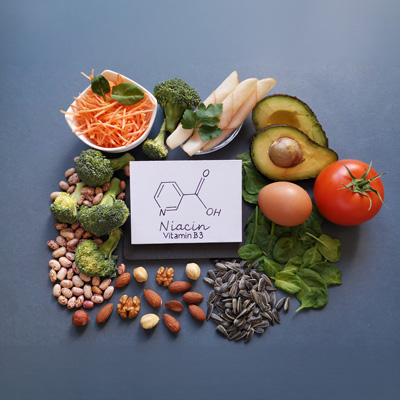
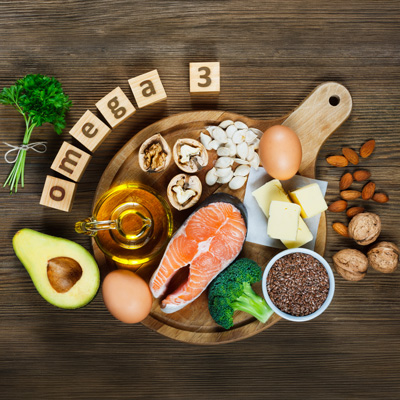
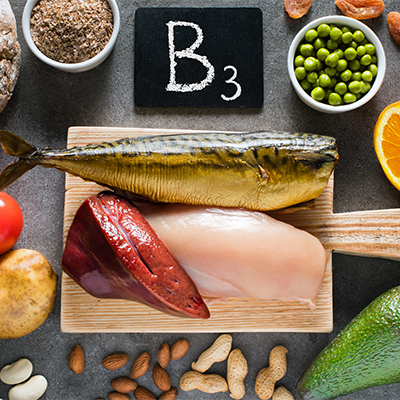
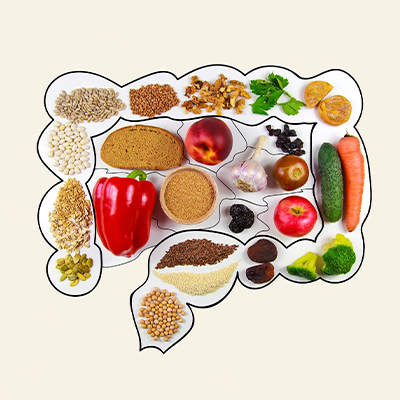
The good news is: You can find choline in many everyday foods. Since it is an essential component of cell membranes, it is found in high concentrations primarily in animal products, but the plant world also offers good options.
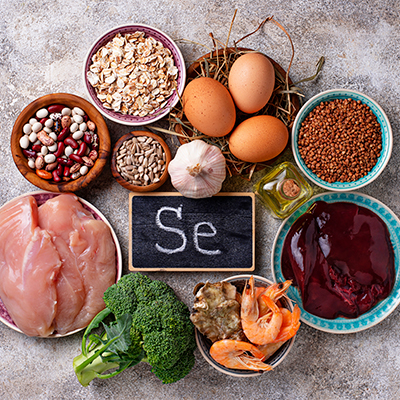
Here are the best sources for your daily focus [5]:
- Eggs: They are among the absolute top sources. Egg yolks, in particular, are packed with choline. One to two eggs a day often cover a large portion of your daily needs.
- Organ meats: If you like them, beef liver is a real choline powerhouse. It’s one of the foods with the highest concentration per serving.
- Fish and meat: Beef, chicken, and fatty fish like salmon or cod are reliable sources that are easy to incorporate into your daily diet.
- Legumes: For those following a plant-based diet, soybeans, chickpeas, and lentils are excellent choices.
- Nuts and seeds: Peanuts and cashews provide not only healthy fats but also a substantial amount of choline.
- Vegetables: Cruciferous vegetables like broccoli and cauliflower also contain significant amounts and round out your nutrient mix.

Here’s where you’ll find choline
You might be wondering: What do I do if I just can’t manage to get enough through my diet? Whether it’s a packed schedule, a plant-based diet, or times when you’re under a lot of mental stress—it’s not always easy to get the necessary amount of choline from food alone.
If you want to manage your intake more precisely, there are several options:
Choline capsules: This is probably the simplest form. They allow for precise dosing and can be easily incorporated into your daily routine without having to completely change your diet.
Lecithin: This form is often available as a powder or granules. Since lecithin is a natural source of phosphatidylcholine, you can simply stir it into your yogurt or smoothie, for example.
Combination supplements: Choline is often combined with B vitamins [1]. This makes sense, as these nutrients are involved in processes within the nervous system and energy metabolism [1].
This way, you can ensure your stores remain well-stocked even when you don’t have time for a balanced meal.
Alpha-GPC and CDP-choline: The specialized forms in capsules
Many high-quality capsules contain these two forms because they have a key advantage: They are considered highly bioavailable and can support choline supply to the brain [6, 7].
- Alpha-GPC is frequently considered in relation to normal cognitive function [7].
- CDP-choline is considered a variant that can additionally support the body in maintaining cell structures in the brain [6].
Both forms thus offer your system an efficient way to replenish choline stores precisely where the nutrient is needed for your mental processes.

In a nutshell: Your take on choline
In summary: If you often feel unfocused in your daily life, choline could be a key solution for you. This nutrient can help your body send messages from A to B faster in your brain, while also contributing to normal fat metabolism. Whether you incorporate more choline-rich foods into your diet or rely on a supplement, you’re simply giving your system the right fuel to stay mentally alert and physically balanced. This way, you can go about your day with fresh energy and a clearer mind.
Curious? In our magazine, you’ll find more exciting articles on the topic:
- Better oxygen supply in the spring thanks to iron and vitamin C as natural boosters
- Nutrients for supermoms: How choline, lecithin, and vitamin B12 can make everyday life easier
- Micronutrients – Small helpers with a big impact
- All about acetyl-L-carnitine: The smart support for clear focus instead of brain fog
FAQ – Frequently Asked Questions
Is too much choline bad for the liver?
In normal amounts, choline is not harmful to the liver. In fact, it contributes to normal liver function by helping to remove fats [8].
Are there any side effects?
In cases of severe overdose, side effects such as nausea, dizziness, or a fishy body odor may occur [9]. However, if you stick to the recommended daily dose, choline is considered safe [9].
How much choline do I need per day?
For adults, a daily intake of about 400 mg of choline is considered appropriate [10]. Since requirements often differ during pregnancy or breastfeeding, intake during these periods should always be discussed with a doctor beforehand.
Can choline help with weight loss?
Choline is not a weight-loss aid, but it contributes to normal fat metabolism [8]. It simply helps your body properly process fats in the system, provided you consume enough of it.
How do I meet my needs as a vegan?
Since choline is primarily found in animal products, vegans should focus more on soy, quinoa, nuts, and broccoli. Because it is often difficult to reach the recommended amounts through plant-based sources alone, supplementation with capsules can be a helpful support.
[1] https://pmc.ncbi.nlm.nih.gov/PMC2782876
[2] https://www.verywellhealth.com/choline-in-eggs-brain-function-benefits
[3] https://www.nature.com/s41467-024-55673-1
[4] https://www.vitalstoff-lexikon.de/Mangelsymptome
[5] https://www.vitalstoff-lexikon.de/Phosphatidyl-Cholin-Lebensmittel
[6] https://pmc.ncbi.nlm.nih.gov/PMC10389840
[7] https://www.news-medical.net/Alpha-GPC-What-Science-Says
[8] https://efsa.onlinelibrary.wiley.com/2011.2056
[9] https://ods.od.nih.gov/Choline-HealthProfessional
[10] https://efsa.onlinelibrary.wiley.com/2016.4484