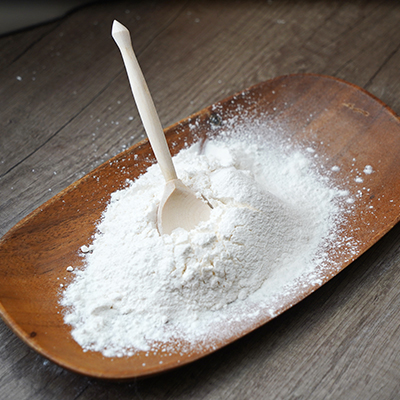
Restless sleep despite feeling tired? The role glycine plays in your recovery
Does this sound familiar? You go to bed exhausted after a long, stressful day, sleep for what should be a long enough time, and yet still feel completely wiped out the next morning. Especially in a busy daily routine juggling work, exercise, and social obligations, we quickly realize how sensitively our bodies react to stress. When restful sleep and inner balance become a challenge, certain nutrients often come into focus.
One of the most exciting players for your nightly recovery and mental clarity is the amino acid glycine. It is far more than just a simple building block of protein; it acts as a gentle regulator in your system and targets exactly where modern stressors leave their mark. In this article, you’ll learn why this unassuming nutrient can be a real game-changer for your focus and recovery.
What’s the deal with glycine?
Have you ever heard of glycine or L-glycine? No? Then you’ve come to the right place. While other substances are in the spotlight, this tiny building block prefers to work quietly in the background. As the smallest of all amino acids, glycine is the ultimate minimalist in your body. Your body is a true DIY genius and usually produces glycine on its own. But when your daily life is in fast-forward mode, internal production can reach its limits.
It gets particularly interesting when you take a closer look at all the ways glycine plays a role. This small building block is anything but insignificant: among other things, it’s involved in the formation of collagen, which gives your skin its structure [1]. At the same time, it plays a unique role in the nervous system. Here, glycine acts more like a quiet counterbalance to the constant noise of everyday life and helps your body enter rest mode after a long day [2].
Putting your nervous system on pause: The brake for your mind
To understand why glycine comes up so often when it comes to winding down, it’s worth taking a look behind the scenes of your internal control center. Your nervous system constantly oscillates between full throttle and deep relaxation. While you operate in power mode during the day, the rest phase should actually kick in in the evening. Since glycine acts as a smooth regulator in the body, it takes on the following roles:
- Stimulus filter: It ensures that the daily flood of signals doesn’t land unchecked in your head [3].
- Rest mode: It paves the way for your system to switch from constant alertness to relaxation [2].
- Pacing agent: It supports the natural processes that slow down your internal rhythm in the evening [2].
Why glycine and your mattress are best friends
If your body doesn’t wind down in time in the evening, the night feels more like a struggle than a restful sleep. This is exactly where glycine comes in as a smart ally. Scientists often study this amino acid because it can help gently lower your core body temperature [2]. For your body, this is the ultimate signal to start the night’s rest.
It’s not just about closing your eyes. Rather, the focus is on the quality of your downtime, so you wake up in the morning not like a zombie, but full of energy. Even though good sleep is a complex puzzle, glycine can be a building block that supports your nightly recovery.
Who can particularly benefit from glycine?
Not every day challenges your body in the same way. Sometimes you’re going full throttle, other times you’re hanging by a thread. This is exactly where glycine provides smart support in the background. Do you belong to one of these groups?
The everyday athletes & sports fans
Whether you’re lifting weights, logging miles on the road, or simply sprinting from one appointment to the next, when you’re constantly on the move, your body is working at full capacity. To stay productive in the long run without burning out, recovery is your most important tool. Glycine plays a key role here, as it’s involved in processes that are crucial for your internal recovery and post-workout regeneration [4].
The “mind-always-on” group
A packed schedule is often just as demanding as a marathon. When your daily life consists of focus, quick decisions, and constant availability, your nervous system often forgets how to shift into reverse. You may be physically done for the day, but your mind keeps working away. During such phases of high mental tension, glycine becomes a valuable partner for your inner balance [2].
The night owls & sleep seekers
You may be sleeping, but in the morning do you feel like you’ve been run over by a truck? This is exactly where glycine consistently takes center stage when it comes to the quality of your night’s rest. As mentioned earlier, this is exciting news for anyone who not only wants to sleep but also wants to jump out of bed feeling truly refreshed in the morning [2].
Glycine on your plate: Your natural source of energy
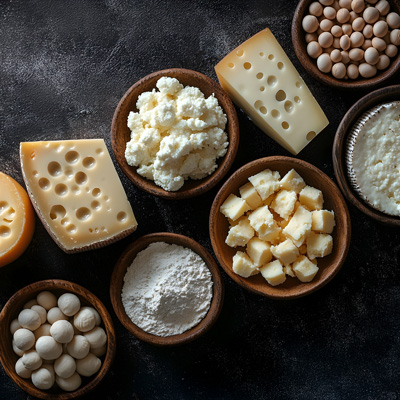
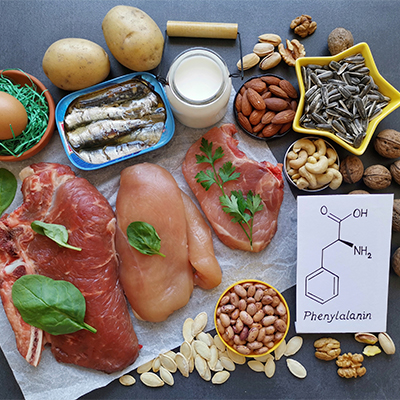
Good news! You don’t have to go to the health food store to stock up on glycine. This essential nutrient is naturally found in many foods you probably already love. Since glycine is a key component of proteins, protein-rich foods are your best allies for getting your daily intake.
These sources give your glycine levels a real boost:
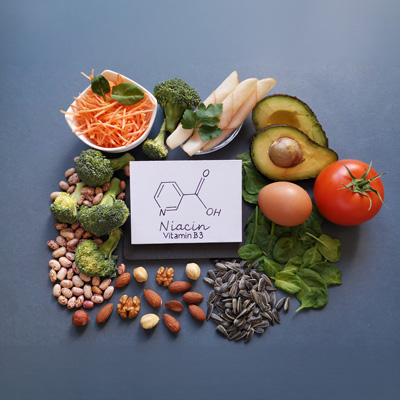
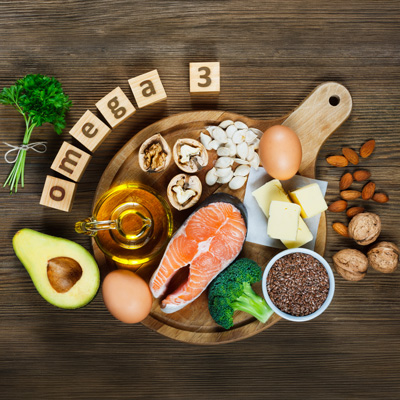
- The full protein lineup: meats like beef or pork, fish, seafood, as well as eggs and dairy products like cheese or yogurt.
- Plant-based powerhouses: oatmeal for your power breakfast, plus nuts, seeds, or legumes in your favorite bowl.
Even though the plant-based options often contain slightly lower amounts, a colorful mix on your plate automatically ensures you get your glycine.
Your upgrade: When glycine makes sense as a supplement
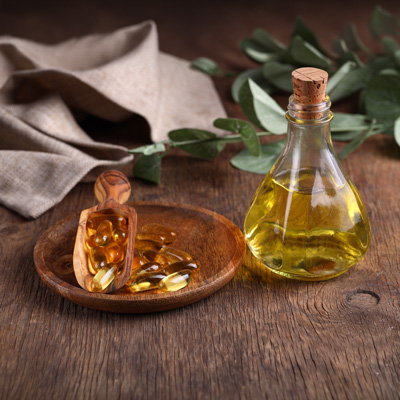
Sometimes, everyday life can be a little simpler than reaching for a knife and fork. In addition to a traditional diet, glycine is also available as a smart upgrade in the form of pure powder or convenient capsules. This becomes particularly relevant when your life is in the fast lane or you’re changing your habits.
However, before you add new elements to your routine, it’s always a good idea to have a quick check-up with your doctor. This way, you can ensure that the supplement fits perfectly with your current lifestyle and individual needs.
Your everyday companion
As you can see, despite its small size, glycine plays a significant role in your modern lifestyle. As part of your daily routine, this amino acid supports your nervous system and acts as a gentle pacemaker for nighttime recovery. This helps you start your day not only feeling alert, but also feeling great.
Curious about other topics? Then take a look at our magazine:
- Cardiovascular system: Our body in motion
- How L-carnitine works in energy metabolism
- A neurotransmitter with diverse effects
- Tired despite longer days?
FAQ – Frequently Asked Questions
Are there any side effects from taking glycine?
In normal amounts, glycine is considered well-tolerated and side effects are rare [5]. However, very high doses may occasionally cause gastrointestinal complaints such as nausea or diarrhea [5]. If you’re unsure what’s right for you, it’s worth consulting a healthcare professional.
Glycine or sleeping pills: What’s the difference?
Glycine is often discussed in connection with relaxation and sleep quality. Unlike traditional sleep aids, the focus here is not on forcing sleep, but rather on the processes involved in the body’s nightly regeneration [6].
Do vegans get enough glycine?
Plant-based foods also contain glycine. However, the amounts are usually somewhat lower than in animal products. With a varied and balanced diet, glycine can still be obtained in sufficient quantities, even without animal-based foods.
Does glycine actually have a taste?
Glycine has a naturally slightly sweet taste and is therefore even used as an additive (E 640) in foods [7]. Many people find the taste mild and unobtrusive, especially when it is stirred into water or other beverages.
How much glycine should you take?
Studies often examine amounts of about 3 grams per day [8]. However, the appropriate amount for you depends on your individual situation. It is recommended to start with a lower dose and gradually increase it.
Can you have a glycine deficiency?
No, a classic glycine deficiency is generally not expected, as your body can produce the amino acid on its own and it is also obtained through your diet.
Sources:[1] https://www.ncbi.nlm.nih.gov/NBK507709
[2] https://pubmed.ncbi.nlm.nih.gov/22293292
[3] https://pmc.ncbi.nlm.nih.gov/PMC9525178
[4] https://www.mdpi.com/265
[5] https://www.vitalstoff-lexikon.de/Glycin/Nebenwirkungen
[6] https://pmc.ncbi.nlm.nih.gov/PMC4397399
[7] https://www.chemie.de/Glycin
[8] https://pmc.ncbi.nlm.nih.gov/PMC3328957