Q10 explained: Ubiquinol or ubiquinone – which form is right for you?
You’re standing in front of the shelf or browsing an online store and have already decided on coenzyme Q10, but then comes the dilemma: ubiquinone or ubiquinol? If you focus solely on price, you’re often missing the key point. It’s no longer a question of whether you should take Q10, but how you ensure it gets straight to where your vitality originates. In this guide, we’ll clarify the key differences so you can make the right choice for your current stage of life.
The biochemistry behind your energy
In your cells, coenzyme Q10 acts as the essential spark for energy production (ATP). While the body can efficiently utilize any form of Q10 in younger years, biological priorities shift over time. Since Q10 is also a powerful antioxidant, it simultaneously protects the delicate processes in the mitochondria from oxidative stress [1].

The battle of the forms: Ubiquinone vs. ubiquinol in detail
The key difference between the two forms lies in their chemical structure and the task your body must perform after ingestion. Both are variants of the same coenzyme, yet they represent different states in your metabolism.
Ubiquinone: The oxidized precursor
Ubiquinone is the form of CoQ10 that has been studied the longest. It is the more stable, oxidized form that we also consume through food (e.g., meat or organ meats). The catch: In order for ubiquinone to function as an energy transporter in your cells, your body must convert it into ubiquinol—a process that requires significant effort.
This conversion process is enzyme-dependent. When you’re young and in good health, this is usually not a problem. However, factors such as advancing age [2], oxidative stress, or a deficiency in certain cofactors can slow down this process. So, if you choose ubiquinone, you’re relying on your body’s “in-house workshop” to handle the conversion smoothly.

Ubiquinol: The Activated “Ready-to-Use” Form
Q10 Ubiquinol is the reduced, active form. It is precisely the variant that circulates in over 90% of healthy human blood plasma [3]. The major advantage is obvious: Your body no longer needs to expend energy to “activate” the molecule. It is immediately available to the mitochondria.
Scientific studies clearly demonstrate that ubiquinol achieves significantly higher blood levels compared to conventional ubiquinone. Bioavailability is often described as being up to 8 times higher [4, 5]. Conversely, this means you would have to take significantly more ubiquinone capsules to achieve the same effect in your system that a single high-quality ubiquinol capsule can provide. This form offers immediate relief, especially for people whose body’s natural production is inhibited by statins [6].
The direct comparison: Which form is right for whom?
Feature |
Ubiquinone (Classic) |
Ubiquinol (Active) |
Biological Condition |
Oxidized (Passive) |
Reduced (Active) |
Bodywork |
Conversion is absolutely necessary |
Ready to use |
Bioavailability |
Good |
Excellent |
Dominance in the Blood |
Small percentage |
Main form |
Ideal for… |
Prevention, young adults |
Over 40, fatigue, statin users |
Cost-effectiveness |
Cheaper per mg |
More efficient per capsule |
The right ways to take Q10
The ideal Q10 dosage should be tailored to your lifestyle:
Basic intake: 30–100 mg daily for general well-being.
Increased needs: 200 mg during periods of high stress or when taking certain medications [7].
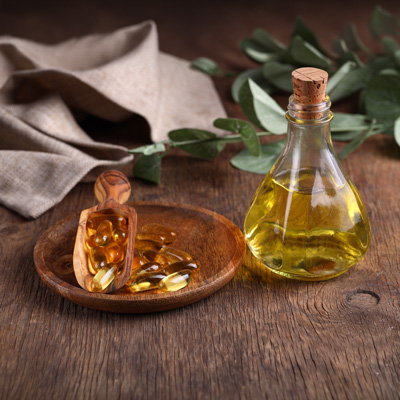
Important tip for taking Q10: Since Q10 is fat-soluble, always take your Q10 capsules with a meal that contains healthy fats (e.g., olive oil, avocado, or nuts). While various formulations can improve absorption, combining Q10 with food remains the most important factor for optimal absorption [8].
Synergies: Why Q10 needs team players
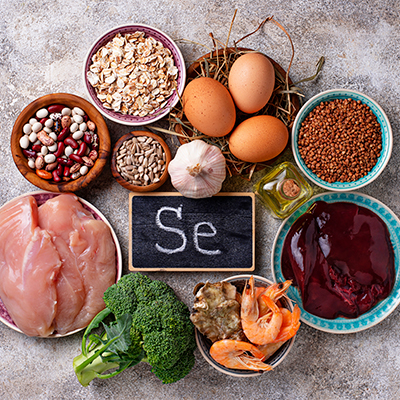
In your metabolism, Q10 rarely works alone. A combination with selenium, for example, has proven particularly valuable for vitality in older adults in long-term studies, as both substances complement each other in their protective function [9].
Your decision-making guide for greater vitality
At the end of the day, it’s not about which form of Q10 is “better” on paper, but rather which one most effectively supports your body in its current phase. Coenzyme Q10 is the spark for your internal engine, but how well that spark ignites is up to you, through your choice of bioavailability.
When is ubiquinone the right choice?
If you’re young, have a healthy metabolism, and are simply looking for a solid, time-tested foundation for your overall well-being, ubiquinone is an excellent and cost-effective option. At this stage, your body usually still has enough capacity to handle the necessary conversion process on its own.
When should you opt for ubiquinol?
As soon as your daily life becomes more intense, you’ve passed 40, or you notice that your recovery periods are taking longer, ubiquinol is the upgrade that can make a difference [4, 5]. By choosing the already activated form, you relieve your system of an enzymatic step and ensure that the energy support reaches the mitochondria directly. Especially if you’re taking statins or under high mental stress, ubiquinol offers the most efficient way to replenish your stores in a targeted and noticeable way [6].
Listen to your body: It often gives you very clear signals when the “ignition key” isn’t turning properly anymore. With the right form of Q10, you give your system back the stability it needs to face the challenges of everyday life with renewed strength and composure.
Curious about other topics? Then take a look at our magazine:
- Feeling tired even though the days are getting longer?
- Constant fatigue despite getting enough sleep? Here’s how a B-complex vitamin can give you new energy during winter fatigue
- Stay alert in the moment, stay focused with caffeine through long summer days
- Ornithine & your liver: The manager keeping your metabolism in check
- Not in the mood for anything? Here’s what might be behind it!
FAQ – Frequently Asked Questions
How does a Q10 deficiency manifest itself?
A deficiency usually manifests through vague symptoms such as persistent listlessness, rapid muscle fatigue, and poor concentration. Since the heart and muscles require the most energy, that’s often where you first notice when the “spark” is missing.
What does Q10 do for migraines?
CoQ10 is valued as a physiological support for energy metabolism in the brain. It is not an acute treatment, but as part of micronutrient supplementation, it can help support neural resilience during stressful periods.
How much Q10 during pregnancy?
There is no general recommendation. Due to the sensitive nature of this phase, supplementation should only be done after consulting a doctor, as research on high doses during pregnancy is limited.
Are liquid Q10 products better than capsules?
Not necessarily. The key factor is the oily matrix, since Q10 is fat-soluble. Drops offer more flexibility in dosing, but capsules provide better protection for the sensitive active ingredient against light and oxidation.
What are the differences between synthetic and natural Q10?
Natural Q10 (from yeast fermentation) provides the bioidentical trans-isomer, which your body recognizes 1:1. Synthetic variants may contain “cis-isomers”, which do not occur in nature and are less effectively utilized.
How do Q10 capsules and Q10 drops differ?
Capsules are the most stable form, as they seal the Q10 in an airtight container. Drops are ideal for people who have difficulty swallowing and allow for individualized dosing, but must be used quickly once opened.
[1] https://www.vitalstoff-lexikon.de/Coenzym-Q10 Funktionen
[2] https://www.verbraucherzentrale.de/coenzym-q10 Produkte-nutzen-wirklich-bewiesen?
[3] https://pubmed.ncbi.nlm.nih.gov/9234900
[4] https://pubmed.ncbi.nlm.nih.gov/27128225
[5] https://www.orthoknowledge.eu/artikel/neue-studien-mit-coenzym-q10
[6] https://www.monitor-versorgungsforschung.de/ubiquinol-hilft-bei-statin-induzierter-kardiomyopathie
[7] https://www.doccheck.com/coenzym-q10-unterschaetztes-potenzial
[8] https://www.burgerstein-foundation.ch/coenzym-q10-update zu wichtigen anwendungsgebieten
[9] https://pubmed.ncbi.nlm.nih.gov/22626835