Everything you need to know about niacin: Functions, sources, and structure of this B vitamin
When your skin, energy levels, and concentration all start to falter at the same time and everything feels a little “off,” it’s worth taking a look at your micronutrient intake. Many factors can contribute to noticeable changes in your daily life, including your intake of certain B vitamins. Niacin is required for key processes related to energy production and the nervous system, which is why it’s increasingly coming up in discussions about fatigue and metabolism.
As an essential vitamin, niacin plays a significant role in the human body. But what exactly is this nutrient, and what functions does it perform in the body? In this article, you’ll learn more about the biochemical roles, the different forms, and the most important sources of this vitamin.
What kind of vitamin is niacin?
Niacin belongs to the B-vitamin group and is therefore also known as vitamin B3. It is a water-soluble vitamin that plays a key role in various fundamental processes in the body. Since the body can hardly store water-soluble vitamins, a regular intake is necessary. It is typically obtained from foods such as meat, fish, poultry, nuts, and whole-grain products.
In addition, the human body has the ability to synthesize vitamin B3 in the liver. The essential amino acid tryptophan serves as the starting material for this process. Since the body cannot produce tryptophan on its own either, this amino acid must also be obtained through the diet. It is abundant in protein-rich animal foods such as meat, fish, dairy products, and eggs, but is also found in plant-based sources such as nuts and seeds.

The effects of niacin
Vitamin B3 acts as a coenzyme in numerous metabolic reactions and performs purely physiological functions in the body:
- Energy metabolism: Niacin is a key component in the conversion of macronutrients. It is involved in the reactions that enable the release of energy from carbohydrates, fats, and proteins [1].
- The nervous system: This vitamin contributes to the normal functioning of the nervous system and plays a role in maintaining nerve cells. An adequate intake supports normal brain function and a normal mental state [1].
- The skin: Niacin contributes to the maintenance of normal skin and mucous membranes. It is involved in cell division processes as well as in the formation of the skin’s natural barrier [2].
Since it is an essential vitamin that the body cannot produce in sufficient quantities on its own, a balanced diet rich in niacin forms the basis for maintaining balanced levels.
Types of vitamin B3
The term “niacin” encompasses various chemical compounds. The three most important forms in everyday life and in the diet are:
Nicotinic acid
This is one of the classic forms of vitamin B3. It plays a major role in energy metabolism. A well-known characteristic of pure nicotinic acid is the so-called “niacin flush”: When higher single doses are taken, temporary vasodilation may occur, which manifests as brief redness and a sensation of warmth on the skin [3].
Niacinamide (nicotinamide)
Niacinamide is another form of the vitamin. Unlike nicotinic acid, niacinamide generally does not cause skin redness or a sensation of heat. Due to its properties, this form is also frequently used in cosmetics and skincare products to support the structure of the skin barrier [2]. Furthermore, it is firmly integrated into the body’s general metabolic processes.
Inositolhexanicotinat
This is a compound of inositol and nicotinic acid. Since this form is broken down more slowly in the body, it is considered a molecular variant that generally leads less frequently to the “flush” effect described above. It is therefore often used in specific nutrient blends.
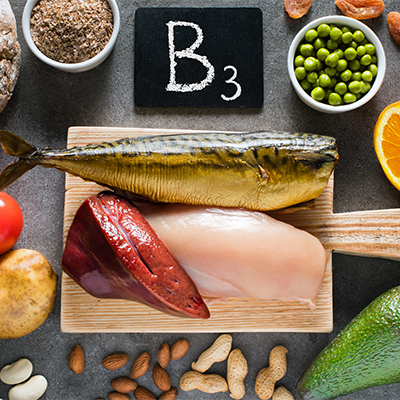
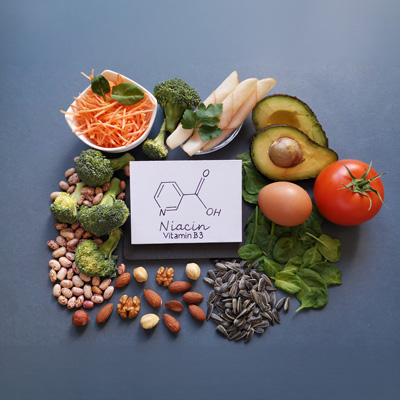
Niacin-rich foods
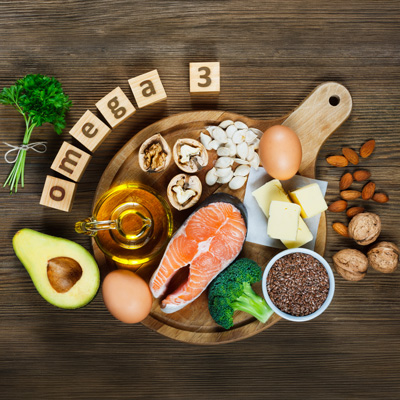
Niacin is found in a wide variety of foods, with protein-rich foods and whole grains being particularly rich sources:
- Meat and organ meats: Beef, chicken, and pork provide significant amounts. Liver is especially rich in niacin.
- Fish: Ocean fish such as tuna, salmon, and mackerel are generally good sources of B-complex vitamins.
- Legumes: Lentils, chickpeas, and peas offer an excellent plant-based alternative.
- Nuts and seeds: Peanuts, sunflower seeds, and flaxseeds contribute to your intake.
- Whole-grain products: Oatmeal, whole-grain bread, and whole-grain pasta contain the vitamin in the outer layers of the grain.
Preparation note: Since niacin is water-soluble, some of the vitamin may leach into the cooking water during cooking. To preserve the nutrient content, steaming or other nutrient-preserving cooking methods are recommended.
What is the daily requirement?
The recommended daily intake is expressed in milligrams of niacin equivalent (NE), since the body can produce about 1 mg of niacin from 60 mg of ingested tryptophan. According to the guidelines of the German Nutrition Society (DGE), the following reference values apply to adults [4]:
- Men (ages 19 to 65): 15 to 16 mg NE per day
- Women (ages 19 to 65): 11 to 12 mg NE per day
- Pregnant and breastfeeding women: Due to changes in metabolism and growth, the estimated requirement is higher here, at approximately 14 to 16 mg NE per day [5, 6].
Altered requirements
Certain life circumstances or physical conditions can cause the body to have increased needs or to absorb nutrients less efficiently:
- Increased energy expenditure: People who are under constant high physical stress or athletes consume more B vitamins due to their increased energy metabolism.
- Specific life stages: Pregnancy and breastfeeding alter the mother’s metabolism and increase the need to nourish the child [5, 6].
- Absorption disorders: Sensitive phases in the gastrointestinal tract or specific intolerances can reduce the efficiency with which the body absorbs niacin from food through the mucous membranes.

Deficiency and overdose
Signs of deficiency
Historically, a severe, long-lasting deficiency has led to the disease pellagra, which is rare today in industrialized countries due to a balanced diet. Early signs of an insufficient intake may manifest as general fatigue, muscle weakness, rough or reddened skin (dermatitis), as well as impaired concentration or sluggish digestion [7].
Consequences of an overdose
If niacin is ingested in extremely high amounts, usually through the uncontrolled consumption of high-dose dietary supplements, it can place a strain on the body. Possible side effects of a significant overdose include, in addition to the described skin flush, gastrointestinal symptoms such as nausea or temporary changes in liver enzyme levels and blood sugar levels [7, 8].

Guidelines for the use of dietary supplements
A balanced and varied diet is the primary way to meet daily niacin needs. If life circumstances or a proven increased need make targeted supplementation advisable, products should ideally be taken with meals. This improves tolerance in the gastrointestinal tract. Before using high-dose single-ingredient supplements, it’s advisable to consult a healthcare professional to determine the appropriate dosage and the optimal form (e.g., niacinamide to avoid the flushing effect).
Curious about other topics? Then take a look at our magazine:
- Dry mucous membranes in winter? Try micronutrients such as niacin (vitamin B3)
- What are B vitamins - and what do we need them for?
- Black Friday without an energy crash: Stay focused throughout November with vitamin B complex
- Constant tiredness despite sleep? How vitamin B complex gives you new energy in winter fatigue
- New cell energy with B vitamins, NADH and alpha lipoic acid
FAQ – Frequently Asked Questions
What is a “vitamin B robber”?
The term “vitamin B robber” refers to factors such as stress, alcohol, or certain medications that increase the body’s consumption of B vitamins or inhibit their absorption. Anyone who is frequently exposed to these factors should pay special attention to ensuring an adequate intake through their daily diet.
Is niacin good for the heart?
Niacin contributes to normal energy metabolism and provides important building blocks for cellular processes throughout the body, including the heart muscle. However, a targeted, high-dose intake intended to influence blood values should only be undertaken under medical supervision.
What is the difference between niacin and niacinamide?
Pure nicotinic acid (often simply called niacin) can cause harmless, temporary skin redness accompanied by a sensation of heat (the niacin flush) at higher doses. Niacinamide, on the other hand, is the “flush-free” form, which is also used particularly frequently in skincare due to its properties.
Is it possible to overdose on vitamin B3?
An overdose through a normal diet is virtually impossible. However, excessive intake can result from the uncontrolled misuse of high-dose dietary supplements and may manifest as gastrointestinal discomfort or skin redness.
Why is tryptophan important for niacin levels?
The essential amino acid tryptophan serves as a natural building block for the body to produce vitamin B3 in the liver. A protein-rich diet therefore indirectly supports a balanced supply of niacin.
[1] https://pmc.ncbi.nlm.nih.gov/PMC6412771
[2] https://pubmed.ncbi.nlm.nih.gov/17147561
[3] https://www.medicalnewstoday.com/niacin-flush
[4] https://www.dge.de/wissenschaft/referenzwerte-niacin
[5] https://pubmed.ncbi.nlm.nih.gov/34748060
[6] https://academic.oup.com/249342124
[7] https://medlineplus.gov/000342
[8] https://www.apotheken.de/niacin