No coffee, but caffeine? What the guarana plant really makes possible
Let’s be honest: How many cups of coffee have you had today? Most of the time, we hope that the next espresso will finally help us focus, but often we notice side effects like a racing heart or jittery fingers, while the next midday slump is already waiting. If you’re familiar with this typical caffeine roller coaster, guarana might be an interesting alternative for you.
The plant from the Amazon is often referred to as the marathon runner among stimulants, as it has a unique dynamic when it comes to energy supply. In the following article, you’ll learn exactly what’s behind this vine of alertness and how it differs from the classic coffee bean.
What exactly is guarana?
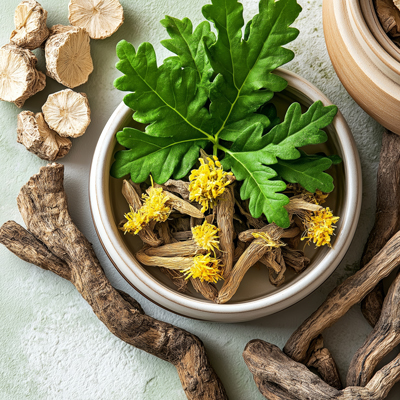
You might think you already know guarana because you’ve seen the name on the ingredient list of trendy energy drinks or sodas. But behind that line in the fine print lies an impressive climbing plant from the Amazon, also known as Paullinia cupana, which winds its way twelve meters up into the trees. Its visual trademark is almost eerie: as soon as the red fruits burst open, a white interior with a black seed is revealed. It looks so deceptively like a human eye that, in the rainforest, you briefly wonder if the plant is staring right at you.
The real power lies in these very seeds. They are packed with natural caffeine, which the plant uses quite pragmatically as a shield against hungry insects. To make powder or capsules, these seeds are dried and finely ground. The result is an extract that contains not only caffeine but also tannins and other plant-based compounds [1]. This makes guarana a true powerhouse from the jungle that has far more to offer than just a spot on a beverage can.

Gentle energy instead of a caffeine shock: How guarana works in the body
When you drink an espresso, the caffeine enters your bloodstream almost unchecked. This provides a quick boost, but often also causes that familiar heart flutter. With guarana, the process is much more relaxed. The secret lies in the tannins contained in the seeds. These act as a sort of brake in the body: the caffeine binds to them and is thus released somewhat more slowly [2].
For you, this means that the energy doesn’t hit you all at once, but often feels more steady over a longer period of time. While coffee is the type to go for a frantic sprint, guarana is more of a marathon runner. The result can be long-lasting focus and a more pleasant alertness without the typical roller-coaster ride [2].
Focus, endurance, and energy: Why everyone is talking about guarana
Thanks to the slow release of caffeine, guarana can be the ideal companion when it comes to “mental endurance.” Instead of putting you into high-energy mode for 20 minutes, the plant can support sustained concentration. This is particularly valuable for knowledge workers or students who have to work on a project for hours without their attention dropping off the map in the meantime.
The Amazonian fruit has also made a name for itself in sports. Since the energy feels more consistent, many report slightly improved endurance during longer training sessions [3]. Another interesting side effect: the caffeine it contains can temporarily suppress feelings of hunger, which is why guarana often appears in contexts related to potential weight management support [4].
The stimulant check: Guarana compared
To help you see where the differences lie, here’s a brief overview of common caffeine sources:
Feature |
Coffee |
Guarana |
Synthetic caffeine |
Time of onset |
Quick (about 15 min.) |
Slower (approx. 45–60 min.) |
Very quickly (about 10 minutes) |
Duration of effect |
Short (1–2 hours) |
Long (up to 6 hours) |
Short (1–2 hours) |
Feeling |
An intense rush |
Gentle focus |
Strong peak |
Stomach comfort |
May contain acid |
Considered to be well-tolerated |
Neutral |
These guidelines are intended to give you a general idea and may vary depending on the product, dosage, and individual sensitivity.

Guarana in Everyday Life: Your Guide to the Right Moment
Since guarana releases its energy so gradually, it all depends on when and for what purpose you use it. The following tips show you a possible approach for incorporating it depending on your goal:
- For focus at the office or while studying: Take guarana about 45 minutes before your most intense work period. This way, you’ll kick off with full concentration exactly when you need it and avoid the classic post-lunch slump.
- For long workouts: Plan to take it about 60 minutes before exercising. Since the effects kick in gradually, you’ll be ready just in time for your warm-up and will benefit from a steady energy supply, especially during sessions lasting longer than 90 minutes.
- For a gentle start to the day: If the quick jolt from coffee in the morning is too intense for you, mix a small amount of powder directly into your breakfast (for example, in a smoothie or yogurt). This way, the caffeine is absorbed even more evenly along with your meal.
- The night shift option: If you really need to stay awake for a long time, guarana is your friend. But be careful: don’t take it too late on regular days. Otherwise, its long-lasting effects could keep you wide awake well into the night, even when you’d actually like to be asleep by then.
When it comes to dosage, you should start slowly. Since the caffeine is highly concentrated, even a small amount is usually enough to feel a difference. Whether you opt for capsules or stir the bitter powder into your juice is purely a matter of taste.
A word of caution: Side effects and precautions
Even though guarana is a natural product, caffeine is still caffeine. If you overdo it, you can expect the usual suspects: heart palpitations, restlessness, or sleep disturbances can occur if the dose was too high. Since the effects kick in with a delay, many people make the mistake of taking another dose too quickly or too strongly. So be patient here.
Especially important: During pregnancy and while breastfeeding, you should pay particular attention to your caffeine intake and consult a healthcare professional if in doubt. The same applies if you take medication regularly, as caffeine can affect the efficacy of certain drugs. Better safe than sorry, so that staying focused remains a positive experience.
Curious to learn more about energy and caffeine? Then take a look at our magazine:
- Sleep better naturally with l-theanine, lemon balm, and passionflower for a new rhythm
- Stay awake in the moment, stay focused with caffeine through long summer days
- Everything you need to know about caffeine tablets
- Green tea and its botanical ingredients
- Clear your mind before things get noisy again – Find your center again with ginkgo, ginseng, and bacopa
FAQ – Frequently Asked Questions
How long does it take for guarana to take effect?
Since the caffeine it contains must first be absorbed by the body, it takes a moment before you feel anything. Depending on the form, this can vary slightly, but the onset of effects is usually around 15 to 45 minutes [5].
Can you take guarana products daily?
For healthy adults, moderate daily caffeine intake is considered safe as long as the recommended dosage is followed [6]. However, it may be a good idea to take breaks every now and then so your body doesn’t get too used to the caffeine and the effect remains noticeable.
When should you avoid taking guarana?
You should exercise caution with guarana during pregnancy and breastfeeding, as well as if you have a known sensitivity to caffeine. Caution is also advised if you have high blood pressure, heart rhythm disorders, or anxiety. If in doubt, or if you are taking medication, you should consult your healthcare provider beforehand.
How can you tell if a product is high-quality?
Look for purity: A good product should be free of unnecessary fillers, sugar, or artificial flavors. Ideally, choose organic products from sustainable farms in Brazil and make sure the manufacturer clearly lists the exact caffeine content per serving on the label.
In what forms can guarana be consumed?
Traditionally, powder is used in smoothies or flavorless capsules. However, it is also a popular stimulant in energy drinks and sodas. While powder and capsules are purer, beverages offer the familiar boost on the go, though often combined with a lot of sugar and other additives.
Is guarana also available as a food?
Yes, guarana is a popular ingredient in energy bars, chocolate, or special fruit gummies. It’s also frequently used in chewing gum to provide a boost between meals. If you want to get creative yourself, you can easily bake it into energy balls or pastries. This way, you can integrate the stimulant directly into your day as a snack.
What is the difference between mate and guarana?
Both provide natural caffeine, but guarana is significantly more concentrated. While mate tea provides a gentle, short-lived boost, guarana, due to its binding with tannins, delivers energy over a slightly longer period. They also differ in taste: mate has a smoky, grassy flavor, while pure guarana tastes very astringent and bitter.
[1] https://www.cambridge.org/core/journals/british-journal-of-nutrition/article/cognitive-effects-of-guarana-supplementation-with-maximal-intensity-cycling/74D717A6F89D553CC2E4D0C5E37FA01F
[2] https://www.mdpi.com/2072-6643/17/6/1000
[3] https://pubmed.ncbi.nlm.nih.gov/37898479/
[4] https://flexikon.doccheck.com/de/Guaran%C3%A1
[5] https://www.efsa.europa.eu/sites/default/files/corporate_publications/files/efsaexplainscaffeine150527de.pdf
[6] https://www.verbraucherzentrale.bayern/faq/haetten-sies-gewusst/welche-wirkung-hat-guarana-31561