L-arginine: What’s behind this popular fitness supplement?
Does this sound familiar? You’re looking forward to your post-workout or an active family outing on the weekend, but your muscles feel as heavy as lead from the very first minute. When you’re not feeling physically refreshed and you’re dragging yourself through your workout, your inner engine is often just missing the right building block. That building block might be L-arginine: a fascinating amino acid that’s an integral part of the proteins in our bodies.
But what actually makes this protein building block so popular? Can it really be the deciding factor for your workout routine, or is it just another fitness trend? We’ll show you how L-arginine can work in your muscle cells, why the right timing makes all the difference, and how you can easily incorporate this nutrient into your daily routine.

What exactly does L-arginine do in your muscles?
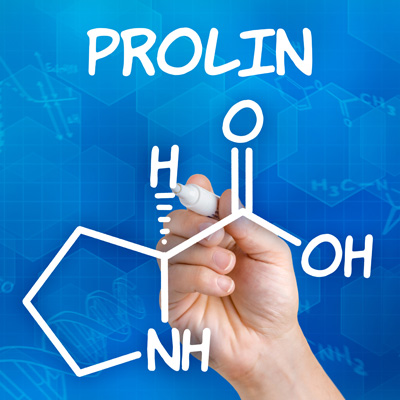
Admittedly, L-arginine sounds like pure chemistry at first. But it’s actually a common protein building block that your body can even produce on its own. The only problem is: During a packed week or an extra workout, your body’s own production just isn’t enough. As soon as your muscles have to work harder, a gap opens up that you need to fill through your diet or supplements.
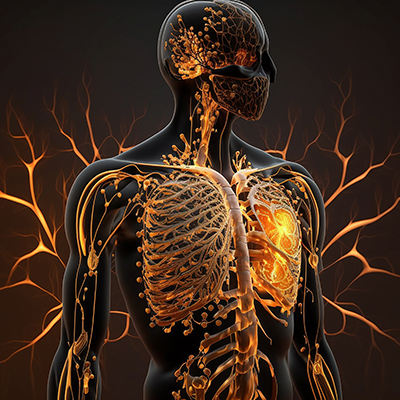
This is mainly because L-arginine is converted in the body into a gas called nitric oxide. This gas helps your blood vessels relax and dilate [1]. The result? Improved blood flow [1]. During your workout, this allows oxygen and nutrients to flow into your muscle cells at exactly the right moment, while natural metabolic waste products like ammonia are quickly cleared away so your legs don’t start feeling like lead before it’s time [2].
The key to your recovery
It’s precisely this improved blood flow that doesn’t simply shut off after your workout, it becomes a crucial factor in your recovery. Because let’s be honest: No one wants to drag themselves through the week like a turtle in slow motion for days on end after working out. When blood can continue to flow freely even after your workout, essential nutrients end up exactly where your strained muscles need them most for recovery.
By the way, L-arginine also supports collagen production, which gives your tendons and ligaments their structure.
How to tell when your muscles need a boost
As an active person or recreational athlete, you naturally burn significantly more energy and nutrients in your daily life than you would while sitting on the couch. Fortunately, your body is pretty straightforward about this and sends you subtle signals in good time when your arginine levels plummet and your body’s own production can no longer keep up. Generally, the daily requirement for active people ranges between 2,000 and 6,000 mg, depending on how intense your day was [3].
Some typical signs in everyday life may include [4]:
- Heavy, sluggish muscles: You feel stiff even during the warm-up and tire out much sooner than usual.
- Endless recovery periods: Muscle soreness lingers for days, and you just feel wiped out despite taking breaks.
- Mental sluggishness: Since blood flow also supplies your brain, a dip in energy sometimes manifests as lapses in concentration.
- Delayed tissue regeneration: Minor scrapes or everyday sports-related aches and pains seem to heal at a snail’s pace.
While a true medical deficiency is rare, chronic stress or intense training can often cause your body’s demand to exceed its own reserves. In most cases, replenishing those stores through diet or supplements is more than enough. However, if you feel constantly tired for weeks on end and just can’t seem to get back on track, it’s worth scheduling a routine checkup with your primary care physician to have a complete blood count and other potential causes ruled out.

Arginine sources: Here’s where you’ll find this essential building block
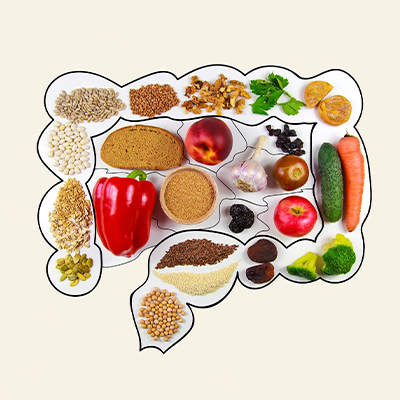
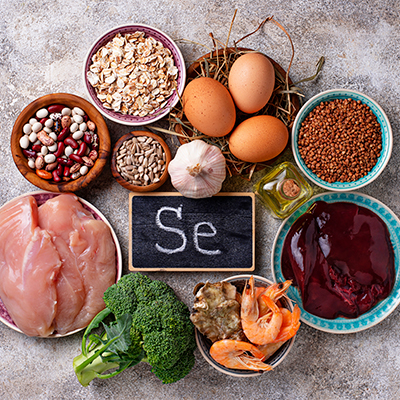
To replenish your stores, start by taking a look at your diet. Many everyday foods contain substantial amounts of this amino acid. Plant-based proteins, in particular, are real powerhouses, but classic animal-based foods also provide a good supply.
Here are a few of the best sources (values in mg per 100 g) [5]:
- Peanuts: 3,460 mg
- Almonds: 2,750 mg
- Lentils & soybeans: over 2,200 mg
- Pumpkin seeds: 5,300 mg (The absolute top choice for a snack between meals)
- Beef & pork: approx. 1,500 mg
- Chicken breast & salmon: approx. 1,300 mg
Capsules and powders as a convenient alternative
If you have a packed schedule, it’s understandable that you don’t always manage to incorporate mountains of nuts, seeds, and legumes into your family’s daily routine to reach the recommended 2,000 to 6,000 mg. This is exactly where supplements come in. They’re the hassle-free shortcut to keeping your stores full without a lot of cooking effort.
If you take a look around the dietary supplement market, you’ll quickly notice that L-arginine is available in two different, high-quality forms. Both have their own unique benefits to help you weigh your options:
Arginine base (the pure form): This provides you with pure arginine, usually obtained through fermentation [6]. Although it’s highly water-soluble, it has a slightly soapy consistency and a taste and smell that take some getting used to.
Arginine HCl (the salt form): This form has a much more neutral smell and taste. The only difference: Since it’s bound to a salt, the pure arginine content is about 70 to 80 percent, which is why you’ll simply need a little more powder for the same dose [6].
Still unsure which form is right for you? In our practical guide to L-arginine detox, we compare the different forms in even greater detail and show you what to look for when purchasing a product to help you reset your body.
The best time to take your dose of L-arginine
Even the best nutrient won’t do you much good if you take it too late. If you want to use L-arginine as a secret weapon against sore muscles, timing is key. That’s because your body needs about 30 to 60 minutes to transport the amino acid to where it’s needed during your workout [3]. So the ideal time to take your dose is just under an hour before your workout or active family outing. That way, your blood vessels are dilated right on time for the start, and your engine is running smoothly when you need it.
On non-training days, or if you’re focused purely on recovery, you can also take your dose in the morning right after waking up. This way, you’ll start the day with good blood flow. As for the amount: 3,000 to 5,000 mg is usually enough to make a noticeable difference in your daily life [6]. It’s best to drink a large glass of water with it, as this allows your body to absorb the amino acid most easily.
Curious about other topics? Then take a look at our magazine:
- Your roadmap to more muscle energy: How to use creatine properly
- Physically and mentally fit - with L-carnosine
- All about citrulline: A closer look at an amino acid
- Ornithine & your liver: The manager for clear conditions in metabolism
FAQ – Frequently Asked Questions
Can L-arginine affect blood pressure?
Since L-arginine stimulates the production of nitric oxide, it signals the blood vessels to relax slightly, which can have a positive effect on blood pressure [1]. However, it is important to always view such approaches to health issues as a gentle supplement and not as a substitute for medical treatment.
Are there any side effects to be aware of when taking it?
When taken in moderate amounts, the amino acid is generally considered to be very well tolerated [1]. If you accidentally take too much, especially if the dose is taken all at once, it can lead to gastrointestinal symptoms such as diarrhea, nausea, or mild cramping [6].
Are there people who should be particularly cautious?
Anyone taking medications that affect blood circulation or suffering from cardiovascular diseases should ideally consult a doctor before taking it. Caution is also advised for those prone to herpes, as the amino acid could promote viral growth.
What role does L-arginine play specifically for women?
Both men and women can benefit from improved blood circulation, whether for enhanced performance during exercise or recovery in daily life. The support for blood flow extends throughout the entire body and can thus naturally contribute to overall well-being.
Can dietary needs be met through diet alone?
On normal, low-stress days, a balanced diet that includes nuts and legumes is usually sufficient to meet the body’s needs. However, when intense exercise or a very demanding daily routine is added to the mix, it can sometimes be difficult to obtain the desired amounts through meals alone.
Can L-arginine help with erectile dysfunction?
Since good blood flow plays a central role in this issue, many men rely on the vasodilatory properties of this amino acid [1]. However, because the causes of erectile dysfunction can be very complex, L-arginine should be viewed more as one possible component among many.

Three key facts to remember
Fact 1: A gas keeps things flowing
In the body, L-arginine is converted into nitric oxide. This gas signals the blood vessels to dilate, making it noticeably easier for nutrients and oxygen to reach your muscles [1].
Fact 2: It’s all about the form
Both forms have their strengths: The pure base provides you with pure arginine, while arginine HCl is bound to a salt, making it particularly easy to dissolve [6].
Fact 3: Your needs increase with your daily routine
Although your body can produce this nutrient on its own, its natural production quickly reaches its limits during exercise or times of stress [6]. This gap can be easily filled through diet or supplements.
[1] https://www.mayoclinic.org/20364681
[2] https://www.ncbi.nlm.nih.gov/PMC8257534
[3] https://www.zentrum-der-gesundheit.de/l-arginin
[4] https://www.vitalstoff-lexikon.de/Arginin-Mangelsymptome
[5] https://www.vitalstoff-lexikon.de/Arginin-Lebensmittel
[6] https://www.vitamindoctor.com/naehrstoffe-arginin