L-Tryptophan for Sleep and Well-Being: What This Amino Acid Can Do for Your Evenings
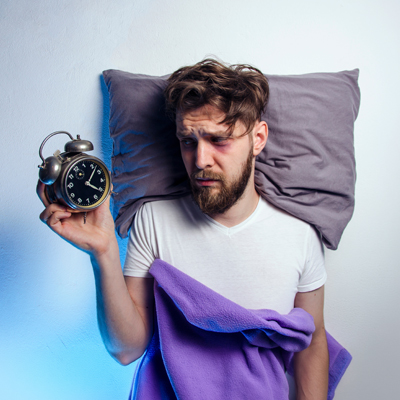
Does this sound familiar? You’re completely exhausted physically, but the moment the lights go out, your brain refuses to shut down. Whether it’s a hormonal rollercoaster, juggling work and family, or the annual shift to daylight saving time: once your internal clock gets thrown off, every evening quickly turns into a test of patience.
This is where the essential amino acid L-tryptophan comes into play. It acts as a natural building block for serotonin and melatonin, two key players in regulating your body's day-night rhythm. Let’s take a look together at how this nutrient works, what it can realistically do, and how you can make sensible use of it for your evening relaxation.

What Exactly Is L-Tryptophan?
L-tryptophan is a natural protein building block. Specifically, it’s an essential amino acid. Put simply: your body can’t produce it on its own, so it relies on you getting enough through food or targeted dietary supplements [1].
L-tryptophan plays a key role in the body. Your organism uses this amino acid to produce serotonin, which it then converts into melatonin in the next step. This is how L-tryptophan provides your metabolism with just the right raw materials to help balance your natural sleep-wake cycle [2].
Why Is This So Important for Sleep?
L-tryptophan serves as the starting trigger for your evening biochemistry. Inside the body, this amino acid sets off a straightforward chain reaction:
L-Tryptophan ➔ Serotonin ➔ Melatonin
- Daytime Duty: During the day, L-tryptophan is converted into serotonin in the brain. Serotonin accompanies you through your day, helping buffer stress and ensuring you don't end up completely wound up when you go to bed [2].
- Night Shift: As soon as it gets dark, your pineal gland uses that serotonin to manufacture melatonin. And melatonin is the exact signal that tells your body: time to wind down.
If L-tryptophan is missing as a foundation, your body simply has less material available to build melatonin. When the primary building block is in short supply, the whole sequence stalls.
How to Spot Low Tryptophan Levels
Sounds like a lot of theory, right? In everyday life, however, you notice relatively quickly when supplies are running low. Because your body can’t make this amino acid itself, persistent stress can drain your daily reserves faster than your diet can replenish them.
Here are signs that your body might benefit from a refill [2]:
- Your mind is racing non-stop: You’re tired, but as soon as the lights go out, your head starts organizing, planning, and overthinking.
- Late-afternoon irritability: When serotonin stores run low, it’s not just your mood that can dip, but also your stress tolerance.
- Your sleep feels restless: You manage to fall asleep, but you wake up at every little sound and feel worn out in the morning.
- Targeted cravings: When the brain lacks tryptophan, it sometimes craves quick carbohydrates, as these facilitate the uptake of the amino acid into the brain.
Important note: These signs are not a medical diagnosis. Sleep issues and inner restlessness can stem from many different causes.
At a Glance: Is L-Tryptophan Right for You?
L-tryptophan can support you if:
- You find it hard to wind down in the evening because your thoughts won't stop spiraling.
- You experience inner restlessness due to everyday stress or hormonal changes (e.g., in your 40s and beyond).
- You want to naturally provide your body with the building blocks for its own sleep hormone.
L-tryptophan is not right for you if:
- You are looking for a heavy-duty, instant-knockout sleep medication.
- You take serotonergic antidepressants (e.g., SSRIs, MAO inhibitors) due to risk of interaction.

L-Tryptophan in Your Daily Diet and Its Limitations
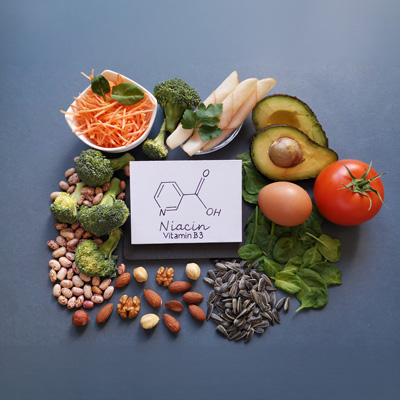
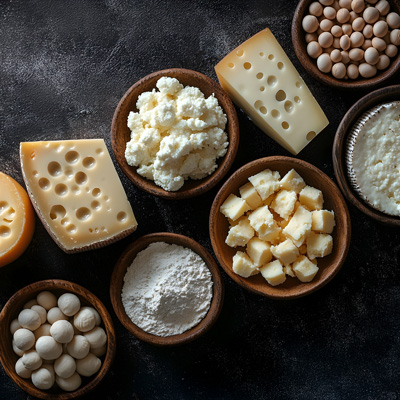
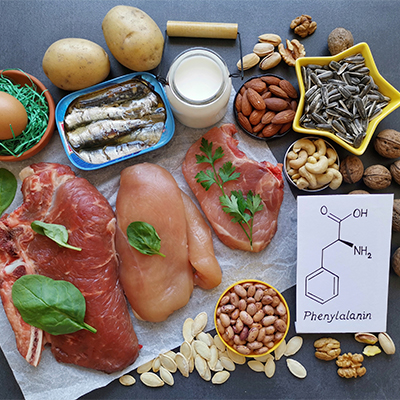
In principle, your daily requirement of L-tryptophan can be covered through a balanced diet. Protein-rich foods in particular deliver a solid amount of this amino acid [3]:
- Emmental and hard cheeses: approx. 500 mg / 100 g
- Sunflower seeds and nuts: approx. 290 mg / 100 g
- Oatmeal: approx. 180 mg / 100 g
- Eggs: approx. 170 mg / 100 g
- Poultry and legumes: approx. 150 to 200 mg / 100 g
Why Dietary Tryptophan Often Delivers Modest Results
Even though L-tryptophan is present in many everyday foods, far less of it reaches the brain than you might think. The reason lies in the blood-brain barrier, which protects your brain. For L-tryptophan to be converted into serotonin and melatonin, it must first cross this barrier [2].
When you eat a regular, protein-heavy meal, you consume a mix of various amino acids. They all use the same transit pathway into the brain. Because other amino acids, like L-leucine or tyrosine, are usually present in much larger quantities, they crowd out L-tryptophan. In the end, only a small fraction reaches the place where it’s actually needed.
How to Successfully Take L-Tryptophan as a Supplement
Sounds complicated? It really isn't. You don't need to be a science expert to use L-tryptophan effectively. Here is how you can effortlessly integrate it into your evening routine:
Because L-tryptophan in capsule form is isolated and doesn't have to compete against other amino acids, it pretty much has a clear path. With a typical evening dose of 500 mg to 1,000 mg, two simple tricks make all the difference:
The Simple Carbohydrate Trick
The ideal time to take it is about 30 to 60 minutes before bedtime, ideally with a glass of water and a bit of time after your last main meal.
A practical tip: Take the capsule along with a small portion of carbohydrates, for example, a sip of fruit juice or a small piece of banana. This tiny amount of sugar prompts your body to release a little insulin. Insulin directs competing amino acids straight into your muscles, clearing the fast lane to the brain for L-tryptophan [4].
Great Companions
For your metabolism to convert L-tryptophan step-by-step into serotonin and melatonin, it relies on key cofactors like vitamin B6. A good baseline supply of B vitamins is therefore a fantastic complement [2].
Important Safety Information
As practical and valuable as targeted supplements can be in everyday life, an attentive approach is always essential. If your sleep troubles are persistent or severely impact your daily life, it’s best to consult a healthcare professional first to determine the cause.
Because L-tryptophan actively interacts with your serotonin system, caution is needed when taking certain medications. Combining it with specific drugs can lead to an overload of serotonin in the body (a condition known as serotonin syndrome).
Be sure to consult your doctor beforehand if you take:
- Serotonergic medications: Standard antidepressants (such as SSRIs, SNRIs, or MAO inhibitors)
- Specific pain and migraine medications: Triptans or active ingredients like tramadol
When you should also check with a professional first:
- During pregnancy and breastfeeding: There is simply not enough conclusive research available yet.
- For children and teenagers: Nutritional support during growth phases should always be coordinated with qualified professionals.
- If you have pre-existing conditions: Such as severe liver or kidney issues.
Curious to learn more? Take a look at our magazine articles:
- Constant tiredness despite sleep? How vitamin B complex gives you new energy in winter fatigue
- What are B vitamins - and what do we need them for?
- New cell energy with B vitamins, NADH and alpha lipoic acid
- Sleep better in winter with magnesium - how to support healthy sleep
- Sore muscles and heavy legs? Why your body might be lacking the right building blocks
FAQ – Frequently Asked Questions
Does L-tryptophan make you sleepy right away?
Not suddenly like a synthetic sleep medication, but very gently through your body's natural melatonin synthesis. It encourages natural relaxation, which is why taking it in the evening is ideal [5].
Does L-tryptophan have side effects?
L-tryptophan is generally very well tolerated since it is a natural amino acid. Only at very high doses or with a particularly sensitive stomach can mild discomforts such as nausea, headaches, or dizziness occasionally occur [5].
Does L-tryptophan also increase dopamine?
No, L-tryptophan is exclusively the building block for serotonin. Dopamine is produced from a completely different amino acid, L-tyrosine.
Is L-tryptophan better than melatonin?
The two work differently: melatonin delivers a direct signal to your body from the outside. L-tryptophan goes one step back and provides the raw material so your body can produce its own sleep hormone as needed.
What happens if you have an L-tryptophan deficiency?
If L-tryptophan is missing as a baseline, your body cannot produce sufficient amounts of serotonin and melatonin. This often manifests as inner restlessness, lower stress tolerance, and difficulty falling or staying asleep [2].
Can omega-3 fatty acids and a healthy lifestyle help with sleep?
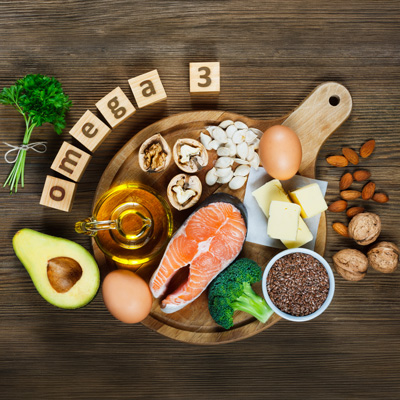
A healthy lifestyle with consistent evening routines always forms the foundation for your body's internal clock. Omega-3 fatty acids can be a great addition, as they support brain cell health and the interplay of neurotransmitters [6].

Three Takeaway Facts
Fact 1: Raw Material for Your Internal Clock
L-tryptophan forms the neurotransmitter serotonin during the day and your body’s sleep hormone, melatonin, after dark. This provides your metabolism with precisely the right materials for a natural day-night rhythm [2].
Fact 2: A Sip of Juice Clears the Lane
At the blood-brain barrier, L-tryptophan has to compete against many other protein components. A tiny portion of sugar (like a sip of fruit juice) triggers a gentle insulin response, parking competing amino acids in the muscles and opening up a clear path into the brain [4].
Fact 3: Natural Building Material Instead of a Chemical Switch
L-tryptophan is not an artificial sedative; it serves as a natural building block for your body's own hormone production [5]. Your organism uses this material flexibly, right when and where it needs it.
Sources:[1] https://pubmed.ncbi.nlm.nih.gov/28799778
[2] https://pmc.ncbi.nlm.nih.gov/PMC2908021
[3] https://www.vitalstoff-lexikon.de/Tryptophan Lebensmittel
[4] https://pmc.ncbi.nlm.nih.gov/PMC9532617
[5] https://pmc.ncbi.nlm.nih.gov/PMC161739
[6] https://pmc.ncbi.nlm.nih.gov/PMC11250910