How the Pineapple Enzyme Bromelain Works in the Body
You’re probably familiar with that pleasant tingling sensation on your tongue when you bite into a piece of fresh pineapple. That’s pure biochemical action: It’s caused by bromelain, a highly active enzyme complex that can break down proteins at lightning speed. But what exactly does this plant-based powerhouse do in your body, and how does it kick-start your digestion when you’re feeling bloated and full after a hearty meal? In the following article, you’ll learn how bromelain works in your daily life and how you can make the most of it.
What’s Behind the Bromelain Phenomenon?
Bromelain is not a single active ingredient, but rather a well-coordinated team of various protein-breaking enzymes. Experts affectionately call them “proteases”, essentially tiny biochemical scissors that break down proteins at lightning speed [1]. This plant-based power is extracted from the pineapple (Ananas comosus). The surprising thing is that it’s not the sweet flesh that provides the main source of bromelain, but the firm, woody core. The flesh simply contains too little active enzyme power to have a noticeable effect.
Incidentally, the fact that the core plays the leading role is also a real win for the environment. Since it’s left over from the harvest anyway, production is extremely sustainable and resource-efficient. After harvest, the core is processed, the enzyme is isolated, and it’s gently dried. The result is a highly concentrated natural extract that can give your digestion a much-needed boost [2].

A Quick Look Inside Your Body’s Digestive System
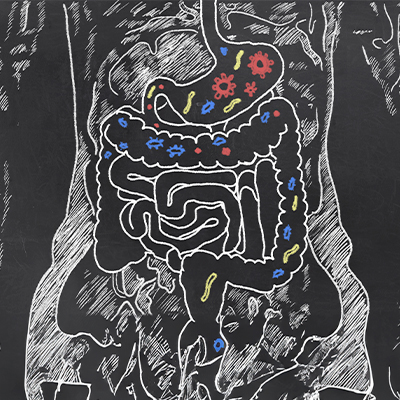
To understand why bromelain actually works so well, let’s first take a look at how your body processes food in the first place. Your digestive system is actually a very finely tuned system: Everything that ends up on your plate is broken down step by step into tiny building blocks so that your intestines can actually absorb the nutrients later on. To do this, your body essentially uses three key groups of enzymes [3]:
- Amylases: These break down carbohydrates, splitting the starch in bread, pasta, or potatoes into sugar molecules.
- Lipases: These are responsible for fats and reliably break them down into free fatty acids.
- Proteases: These tackle proteins and break down the long, complex amino acid chains.
But it’s precisely these proteins that are a real challenge! Proteins from meat, cheese, eggs, or legumes pose quite a challenge for your gastrointestinal tract. If your own proteases can’t keep up fast enough with a slightly heavier meal, the food stays in your stomach much longer than usual. You’ll usually feel this right away: you get that nasty bloated feeling, gas builds up, and your stomach just feels super sluggish. This is exactly where bromelain, a plant-based protease, comes in and can help your body break down proteins more quickly again [4].
Dual Action: An Enzyme with Two Sides
What’s fascinating about bromelain is its amazing versatility. Researchers refer to this as “dual action”: Depending on when you take the enzyme, it produces very different effects in the body.
If you take bromelain right before or during a meal, it acts as a digestive aid directly in the stomach. It mixes with the chyme, breaks down the proteins in your food, and thereby takes some of the work off your digestive system. The food is broken down more quickly, moves on to the small intestine faster, and the typical feeling of heaviness hardly stands a chance [5].
If, on the other hand, you take the enzyme on an empty stomach, it travels on to the small intestine because there is no food in the stomach to break down. From there, parts of the enzyme can enter the bloodstream. In numerous clinical studies, scientists are intensively investigating this pathway to better understand how the enzyme can support the body’s own processes in cases of tissue swelling, sports injuries, or even in connection with chronic inflammation [4, 5].

Form and Timing: How to Use Bromelain Correctly
To ensure the pineapple enzyme does exactly what it’s supposed to in your daily routine, there are a few simple tips for taking it. How well bromelain works for you depends not only on the product itself, but above all on the right form, timing, and appropriate dosage.
Capsules, Tablets, or Powder?
Capsules or tablets are the most convenient way to take it, since they let you avoid the taste and ensure precise dosing. Powder, on the other hand, can be easily mixed into drinks, but its taste may take some getting used to.
If you want to use bromelain for your body rather than just your stomach, it’s best to choose enteric-coated capsules. Unlike powder or regular tablets, these protect the enzyme from stomach acid so that it reaches the small intestine intact [2].
When Is the Best Time to Take It?
The timing depends purely on what you need at the moment:
- For digestion: If you know you’re about to have a heavy meal, take the enzyme right before your first bite or while you’re eating. That way, bromelain is already there when the proteins reach your stomach and can start breaking them down immediately [5].
- For the rest of the body: If you want some of the enzyme to enter the body via the bloodstream, it’s best to take it on an empty stomach. That is, at least one hour before a meal or two to three hours afterward. This allows the enzyme to pass through the stomach undisturbed and prevents it from being used up during digestion [5].
Dosage: What’s the Right Amount?
Since enzyme supplements vary widely, there’s no one-size-fits-all dose in milligrams. As a rough guide for your daily routine [5]:
- For digestion: Lower doses taken directly with a meal are usually sufficient to relieve the stomach.
- For general well-being: For processes in the rest of the body, in practice, people tend to use moderate to higher daily doses, taken on an empty stomach as described above.
Our tip: Always follow the manufacturer’s recommended dosage on the package when you start. If you have a very sensitive stomach, it’s best to begin with a lower dose and see how you feel.
Quality Criteria: What to Look for When Buying
To ensure that bromelain can work effectively in your body, it’s worth taking a close look at the label when you buy it. Many people first look at the milligram count alone. The problem with this is that it only tells you how much powder is in the capsule, but nothing at all about how potent the enzyme actually is!
Instead, look for the enzyme activity. It’s usually listed in F.I.P. units or GDU (Gelatin Digesting Units). These values show you exactly how many protein compounds the enzyme can actually break down in a given time (good products often range from about 1,000 to 2,000 F.I.P. per daily dose) [2]. The higher this activity value is, the more effective the product is.
Safety, Tolerability, and Possible Side Effects
Since bromelain is entirely plant-based, it is well tolerated by most people. However, in rare cases, it may cause mild allergic reactions or gastrointestinal upset [4].
Special caution is also advised in the following situations [5]:
- Allergies: If you’re allergic to pineapple, latex, papaya, or grass pollen, it’s best to avoid bromelain, as cross-reactions may occur.
- Blood Clotting: Bromelain has mild blood-thinning properties. If you’re already taking anticoagulants or are scheduled for surgery soon, you should consult a doctor beforehand.
- Medications: The enzyme can significantly increase the body’s absorption of certain medications, such as some antibiotics.
Important! Recurring gastrointestinal symptoms or pain should always be evaluated by a doctor. Bromelain serves as a useful supplement, not as a substitute for a thorough investigation of the underlying cause. It’s best to briefly consult your doctor before taking it, just to be safe.

4 Simple Everyday Routines for Your Gut Health
So bromelain is a really great ally for your well-being, but of course it’s not a free pass to eat whatever you want all the time. A balanced diet is always the most important foundation for healthy digestion. However, you’ll feel the lightest in your stomach if you combine the enzyme with a few simple habits:
- Chew carefully: Make a conscious effort to take your time while eating! After all, digestion begins in your mouth. The more thoroughly you chew, the easier it will be on your stomach later.
- Include bitter foods: A small salad with arugula or chicory as an appetizer can stimulate your body’s own digestive juices immediately [6].
- Drink at the right times: Drink plenty of water throughout the day, but avoid huge amounts right before a heavy meal to avoid unnecessarily diluting the enzyme concentration in your stomach.
- Take a short walk: A little exercise after a meal can really work its magic. A short stroll in the fresh air naturally gets your gastrointestinal tract going.
Interested in learning more? Then take a look at our magazine:
- Understanding Triphala: Three fruits for your digestion and inner balance
- Naturally against allergies - How black cumin oil and quercetin can help
- Calm stomach in the office: Balance with lactic acid bacteria for a healthy gut
- All about gut health
- Strong defenses when the weather changes with rockrose, zinc and vitamin C
FAQ – Frequently Asked Questions
What is bromelain good for? What are the effects of bromelain?
Bromelain is a group of enzymes that, as a plant-based protease, can break down proteins. This ability is used to aid digestion. In addition, bromelain is the subject of research investigating its potential systemic effects, such as on inflammatory processes [5].
How long does it take for bromelain to take effect?
If you take the enzyme with a meal, it begins working in the stomach within just a few minutes. However, if you’re seeking effects throughout the rest of the body, the effects usually become apparent after a few days with regular use [4].
When should you avoid taking bromelain?
If you have a known allergy to pineapple or latex, if you have blood clotting disorders, or if you’re a child, pregnant, or breastfeeding, you should avoid taking bromelain. The same applies if you regularly take various medications or are scheduled for surgery [4, 5].
How can you tell if you’re lacking digestive enzymes?
A deficiency in digestive enzymes can manifest as nonspecific gastrointestinal symptoms such as a feeling of fullness, bloating, or abdominal pain after eating [7]. However, these symptoms are not definitive and can have many causes. An accurate diagnosis requires a medical examination.
[1] https://pmc.ncbi.nlm.nih.gov/articles/PMC8534447/
[2] https://pmc.ncbi.nlm.nih.gov/articles/PMC3529416/
[3] https://www.aok.de/pk/magazin/koerper-psyche/verdauungssystem/wie-genau-funktioniert-die-verdauung/
[4] https://pmc.ncbi.nlm.nih.gov/articles/PMC11243481/
[5] https://www.arztpraxis-muotathal.ch/wp-content/uploads/2022/07/Bromelain.pdf
[6] https://www.deine-gesundheitswelt.de/balance-ernaehrung/bitterstoffe
[7] https://www.ncbi.nlm.nih.gov/books/NBK555926/